Resumen
In this paper, we tackle the Cyclic Bandwidth Sum Problem, consisting in minimizing the sum of the bandwidth of the edges of an input graph computed in a cycle-structured host graph. This problem has been widely studied in the literature due to its multiple real-world applications, such as circuit design, migration of telecommunication networks, or graph drawing, among others. Particularly, we tackle this problem by proposing a multistart procedure whose main components are a new greedy constructive algorithm and an intensification strategy based on the Variable Neighborhood Search metaheuristic. The constructive procedure introduces two different greedy criteria to determine each step of the construction phase, which can be used for other related problems. Additionally, we illustrate how to perform an efficient exploration of the neighborhood structure by using an alternative neighborhood. Our algorithmic proposal is evaluated over a set of 40 instances previously studied in the literature and over a new proposed set of 66 well-known instances introduced in this paper. The obtained results have been satisfactory compared with the ones obtained by the best previous algorithm in the state of the art. The statistical tests performed indicate that the differences between the methods are significant.
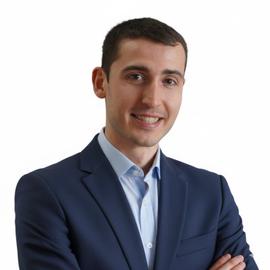
Sergio Cavero
Doctor en Inteligencia Artificial
Sergio Cavero nació en Madrid (España) el 24 de septiembre de 1997. Se graduó en Ingeniería del Software por la Universidad Politécnica de Madrid en 2019. Durante sus estudios de grado realizó una estancia en la Universidad de Bradford (Reino Unido). Además, fue galardonado en dos ocasiones con la Beca de Excelencia de la Comunidad de Madrid, así como con el premio al Mejor Proyecto Fin de Carrera. Posteriormente, realizó un Máster en Inteligencia Artificial en la misma universidad (UPM) obteniendo los premios al Mejor Expediente Académico (‘Premio José Cuena’) y al Mejor Trabajo Fin de Máster. Sus resultados académicos le permitieron ser beneficiario de una de las ‘Ayudas para la Formación de Profesorado Universitario (FPU)’, financiadas por el Gobierno español. Actualmente realiza su tesis doctoral en la Universidad Rey Juan Carlos, dirigida por los profesores Abraham Duarte y Eduardo G. Pardo. Sus principales intereses de investigación se centran en la interfaz entre las Ciencias de la Computación, la Inteligencia Artificial y la Investigación Operativa. La mayoría de sus publicaciones tratan sobre el desarrollo de procedimientos metaheurísticos para problemas de optimización modelados por grafos.
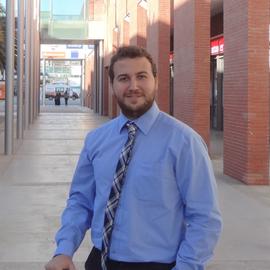
Eduardo García Pardo
Catedrático de Universidad
Miembro fundador del grupo de investigación GRAFO, cuya línea de investigación principal es el desarrollo de algoritmos para abordar problemas de optimización, temática sobre la que versa la Tesis Doctoral del investigador y en la que se enmarcan sus publicaciones más destacadas.
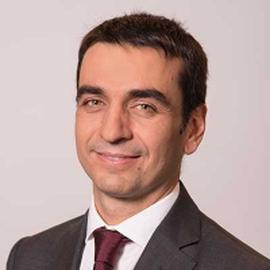
Abraham Duarte
Catedrático de Universidad
Mi carrera investigadora se ha centrado en el desarrollo de nuevos algoritmos y técnicas de Inteligencia Computacional (metaheurísticas) y su aplicación a diferentes problemas en Ciencia e Ingeniería desde que me incorporé a la Universidad Rey Juan Carlos (URJC) en el octubre del año 2000.