A Competitive Platform for Automated Evaluation of Optimization Algorithms in Computing Education
Abstract
Gamification and competitive learning are widely recognized in computing education as effective strategies to increase engagement and promote a deeper understanding of complex topics. Previous research highlights the benefits of integrating competitions into programming courses. However, existing tools lack mechanisms for scalable, quality-based evaluation and immediate feedback, which are critical elements for optimization-focused courses. This paper reports on the design and deployment of a novel competitive platform for the course Algoritmos de Búsqueda II of the Grado en Inteligencia Artificial (Search Algorithms II and Artificial Intelligence degree, respectively) at Universidad Rey Juan Carlos that addresses the aforementioned gaps. Unlike previously used systems, which primarily support code submission and correctness checks, our platform introduces several innovative features rarely combined in the literature: proportional scoring based on solution quality, automated constraints validation, and real-time leaderboards. These capabilities enable instructors to create contests, define validation mechanisms, and manage user roles, while students can submit solutions and monitor rankings dynamically, fostering autonomy and motivation, competing to provide better solutions than other students. The automated platform introduced in the 2025–2026 academic year substantially increased student engagement compared to the previous manual, spreadsheet-based approach used in 2024–2025. With similar enrollment numbers (30 students versus 29), active participation increased from 34.3% to 76.5%. Students also demonstrated greater engagement, submitting an average of 5.1 solutions, representing a 142% increase over the previous year’s average of 2.1 submissions per student. Furthermore, 56% of these activities occurred outside of scheduled laboratory sessions, highlighting the effectiveness of the platform in fostering autonomous and self-directed learning within a competitive and gamified environment.
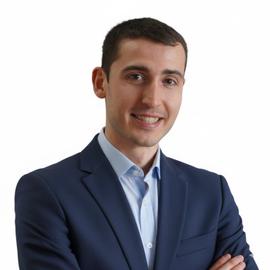
Sergio Cavero
Phd in Artificial Intelligence
Sergio Cavero was born Madrid (Spain) on September 24, 1997. He graduated in Software Engineering from Universidad Politécnica de Madrid in 2019. During his undergraduate studies he made a stay at the University of Bradford (UK). In addition, he was awarded twice with the ‘Beca de Excelencia of the Comunidad de Madrid, and also awarded for the Best Final Degree Project. Later, he completed a Master’s Degree in Artificial Intelligence at the same university (UPM) obtaining awards for Best Academic Record (‘Premio José Cuena’) and Best Master’s Thesis. He academic results lend him be beneficiary of one of the ‘Ayudas Para la Formación de Profesorado Universitario (FPU)’, funded by the Spanish Government. He is currently carrying out his doctoral thesis at the Universidad Rey Juan Carlos, supervised by Professors Abraham Duarte and Eduardo G. Pardo. His main research interests focus on the interface among Computer Science, Artificial Intelligence and Operations Research. Most of his publications deal with the development of metaheuristics procedures for optimization problems modeled by graphs.

Javier Yuste
Phd in Artificial Intelligence
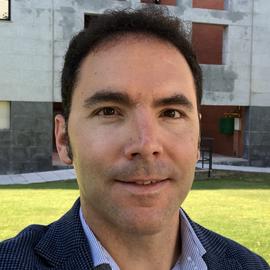
J. Manuel Colmenar
Full Professor
My research interests are focused on metaheuristics applied to optimization problems. I have worked on different combinatorial optimization problems applying trajectorial algorithms such us GRASP or VNS. Besides, I am very interested in applications of Grammatical Evolution, specifically in model and prediction domain, as alternative to machine learning approaches.

Eduardo García Pardo
Full Professor
One of the founders of the investigation group GRAFO, whose main line of research is the development of algorithms to tackle optimization problems, the topic of the researcher’s Doctoral Thesis and which their most notable publications are framed.